|
Background Discussions
31 December 2016
...
military member and emergency personnel; law enforcement and
firefighters, et. al., and their plight with suicide do not get the
appropriate level of attention - especially associated to PTSD, which
resonates and impacts their lives over extended periods of time, and
often leads to severe depression. -- J. Mikulski.
Please
let me be clear, though this discussion relates to challenges in the
United States, the same needs exist in every NATO and Interpol member
country, now engaged in the Global War on Terrorism. -- Stephen M.
Apatow, Lead from the Front - Mediation - Leadership
Development: HRI:H-II OPSEC.
Special thanks to
iHeartRadio - AirPlay Direct - CD Baby for supporting Arts Integration
Into Education, and our troops, police, fire and emergency medical
services, keeping us safe, on the frontline, 24/7/365.
14 May 2016
Bobby Henline: A Game
Changer
So honored to be part of this CNN video. I've always wanted to
show who we are inside. I think it helps get awareness out there for
wounded veterans, for other civilians with disfigurements, burns,
amputations. This creates awareness and shows the beauty, shows
who you are inside is really who you are, that the shell doesn't matter
that much. -- Bobby Henline, 4-tour Iraqi War
Veteran, comedian, motivational speaker at Well Done Comedy.
Related:
16 February 2016
Why be concerned about Home Made Explosives (HME) in Afghanistan ?
Concussions from IED blasts contribute to many of the 333,000+
traumatic brain injuries (TBI) reported by Veterans who served in
Afghanistan and Iraq.
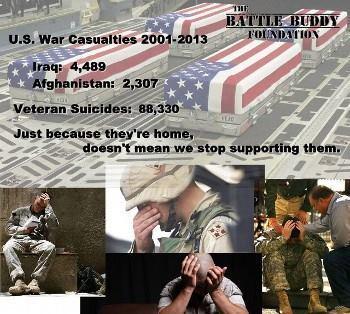
How many of the 88,330 veterans suicides (2001-2013) were related to
Traumatic Brain Injuries ?
Follow the discussion at:
30 March 2015
Military.com has
partnered with TakePart.com, Participant Media’s digital magazine and
social action platform to present a powerful documentary, That Which I
Love Destroys Me. The film offers a candid look at PTSD through the
eyes of two Special Operations veterans –Tyler Grey and Jayson Floyd –
and charts their journeys toward healing through their struggles to
rebuild relationships with family and exploring their trauma up close.
-- Veteran
Jayson Floyd Talks About PTSD & ‘TWILDM’: Military.com, 25
March 2015.
4 February 2015
According to the latest government data,
an estimated 22 veterans kill themselves every day. While many are
older veterans, a survey by the Iraq and Afghanistan Veterans of
America — which had made the Clay Hunt bill a centerpiece of its
efforts to prevent veteran suicides — found that two out of five of its
members knew a recent combat veteran who had committed suicide.
-- Preventing
Suicides Among Veterans Is at Center of Bill Passed by Senate: NYT,
3 February 2015.
Veterans Suicide Rate: What 22 per day means:
21 December 2014
Keeping
our military service members in our thoughts and prayers this holiday
season, remembering, they represent only one percent of our population,
but they shoulder the responsibility of protecting our entire Nation.
Continuing
our work to network the educational resource "How
to Help Military and Veteran Families, Before, During and After
Deployment," to every home in America.
15 December 2014
Special Forces Prayer
Almighty GOD, Who art the Author of liberty
and the Champion of the oppressed, hear our prayer.
We, the men of Special Forces, acknowledge
our dependence upon Thee in the preservation of human freedom.
Go with us as we seek to defend the defenseless and to free the
enslaved.
May we ever remember that our nation, whose motto
is “In God We Trust”, expects that we shall acquit
ourselves with honor, that we may never bring shame
upon our faith, our families, or our fellow men.
Grant us wisdom from Thy mind, courage from Thine
heart, strength from Thine arm, and protection by Thine hand.
It is for Thee that we do battle, and to Thee belongs the victor’s
crown.
For Thine is the kingdom, and the power and the glory, forever. AMEN
-- Special Forces Prayer: Written in 1961 for William Pelham "Bill"
Yarborough by SF Chaplain John Stevey, the 7th SFG (ABN) Chaplain.
26 November 2014
On this Thanksgiving Holiday, Remembering in Prayer, our Active Duty
Troops, Veterans and their Families and on the front line in the United
States, our Law Enforcement Officers, Firefighters and EMS, who place
their lives on the line, every day, Protecting Life, Liberty and the
Pursuit of Happiness, in the Land of the Free and Home of the Brave.
17 November 2014
Connecticut Leads Nation
in Efforts to Ensure Help for Veterans
Safetynet needed
in all 50 States
Connecticut hospitals
required to ask all patients if they are veterans, under a new state
law that takes effect Oct. 1. The law is part of a nationwide effort
conceived by the State Veterans Affairs Commissioner Linda Schwartz to
make private health providers aware that they are treating veterans,
since most veterans don’t go to federal Veterans Health Administration
facilities. The goal is to improve veterans’ diagnoses and health care
because military experiences are linked to certain illnesses. --
To
Improve Patient Care, CT Hospitals Will Ask: Are You A Veteran?: CT
Health I Team, 19 June 2014.
Back Up Systems:
Humanitarian Relief Efforts in the United States
88,330 Veterans Suicides (2001-2013)
Americans Focus on Research and Study for
Veterans Support.
Study materials for Americans that want to understand the landscape of
veterans support: "On
Combat" and "On
Killing" by Lt. Col. Dave Grossman (FBI Academy in Quantico,
Virginia, ATF, and on the United States Marine Corps' recommended
reading list). Available on Amazon. These resources will help us
better appreciate and honor our nations veterans. Of course in
conjunction with "How
to Help Military and Veteran Families, Before, During and After
Deployment," PDF.
12 November 2014
As the Afghanistan
campaign winds down, more servicemen and women will transition to
civilian life. Some will be wounded by their experiences. The wounds we
can see have become more treatable than ever before, but what about the
wounds we can’t see?
9 November 2014
"Our
military service members represent only one percent of our population,
but
they shoulder the responsibility of protecting our entire Nation."
Veterans Day 2014 -- Not Forgotten -
Restore Warriors Project
While we are
expanding Counterterrorism
Education for Law Enforcement in American cities,
we also need to expand programs
on how to defuse confrontations with troubled veterans, who have traumatic
brain injuries and PTSD.
Casualties
of the After-War: Stars and Stripes
Special Report.
88,330 Veterans
Suicides 2001-2013
Humanitarian
Resource
Institute is advancing a national appeal to assist our troops, veterans
and their families by helping network the educational resource "How
to Help Military and Veteran Families, Before, During and After
Deployment,"
(PDF Download), to every home in
America. The focus of this effort is to optimize at least 5
separate communication paths to
every home in America, through social media,
newspaper/radio/television,
federal/state/local government, utilities companies, interfaith
organizations, nonprofit organizations and school districts.
7 November 2014
Acquisition of Iraqi legacy chemical weapons by ISIL, increased
intenational attention on these stockpiles and troop exposures during
Gulf War 1-2.
The progression of
uncontainable cancer cases in troops following these exposures, has
heightened the call to fastrack Tumor Infiltrating Lymphocyte Therapies
and Immune System Therapeutics. -- Never Give Up: Cancer Education and
Advocacy.
5 November 2014
Veterans Career
Transition Program (VCTP): Saracuse University.
Transitioning
from the military to careers in civilian business/industry, government
and other careers often presents two challenges:
- How
to translate education, experience, skills and training from a military
to civilian environment to be a competitive candidate for recruitment
and hiring?
- How to develop the
soft skills necessary to succeed in a civilian corporate or government
environment, particularly in business sectors not closely connected to
the military?
The Veterans Career Transition
Program, operated by the Institute for Veterans and Military Families
at Syracuse University, is delivered at no cost to post-9/11 veterans,
their spouses, and spouses of active duty military. Paid for in
entirety by a grant from JPMorgan Chase & Co, VCTP offers solutions
to the above challenges, as well as connections to specific education
and training programs, business/industry coalitions focused on veteran
employment and information about national and state-level opportunities
and benefits for veterans and their families.
4
July 2014
How to
Support Our Troops, Veterans & Families
In celebration of
Independence Day 2014, Humanitarian Resource
Institute is advancing a national appeal to assist our troops, veterans
and their families by helping network the educational resource "How
to Help Military and Veteran Families, Before, During and After
Deployment," (PDF Download), to every home in
America. The focus of this effort is to optimize at least 5
separate communication paths to
every home, through social media, newspaper/radio/television,
federal/state/local government, utilities companies, interfaith
organizations, nonprofit organizations and school districts.
Humanitarian
Resource Institute, through the "America's
Action Plan for Community Service" continues to (1) support educational
initiatives
through communication networks developed in cooperation with the
Federal Emergency
Management Agency and Emergency Food and Shelter National Board
Program, that reach every
city/county area in the United States
and (2) encourage communities to organize touch outreach initiatives
for hand delivery of resource information to the household level.
27 June 2014
The National Center for PTSD promotes awareness of PTSD and effective
treatments throughout the year. Starting in 2010, Congress named June
27th PTSD Awareness Day (S. Res. 455). Since then, during the month of
June, we ask everyone to help us raise PTSD awareness. -- PTSD:
National Center for PTSD:
U.S. Department of Veterans Affairs.
25 June 2014
Continuing Education
The
Limits of Adaptive Coping: Neurobiology of Extreme Stress : DCoE Webinar Series
(Psychological Health): June 2014, Date/Time: June 26, 2014; 1-2:30
p.m. (EDT), Cost: Free.
5 June 2014
The Strategic Memory
Advanced Reasoning Training, or SMART, program is based on cognitive
neuroscience principles of how to best engage the rapidly developing
frontal brain networks to build strategic thinking, advanced reasoning
and innovative problem solving skills. The SMART program trains
cognitive strategies to improve brain efficiency through organization,
synthesis, abstraction and interpretation of meaning, based on brain
science that has shown that constructing novel, generalized meanings is
how the brain best learns. -- Strategic
Memory Advanced Reasoning Training (SMART): Center for Brain
Health, University of Texas at Dallas.
27 March 2014
Just released from the Warrior Dog Foundation:
10
February 2014
Single-Photon
Emission Computerized Tomography (SPECT: Mayo Clinic): A SPECT scan is
primarily used to view how blood flows through arteries and veins in
the brain. Tests have shown that it might be more sensitive to brain
injury than either MRI or CT scanning because it can detect reduced
blood flow to injured sites.
Sports Medicine
& Science Institute drives focus to decrease Rx drugs and
increase Rx aerobic activity & neuro-cognitive exercises for Post Traumatic Stress
Disorder (PTSD) and Traumatic Brain Injury (TBI). Special
thanks to Dr.
William Bograkos, MA, DO, FACOEP, FACOFP, Medical Director NeuroRestorative National Capitol
Region.
New Online Resources:
14
February 2014
Keeping the 95,126 + families in prayer, who won't have a Happy
Valentines Day.
4
February 2014
“He
is your friend, your partner, your defender, your dog. You are his
life, his love, his leader. He will be yours, faithful and true, to the
last beat of his heart. You owe it to him to be worthy of such
devotion.”
-- Warrior Dog
Foundation
The U.S.
Veteran Service Dog Program and Trupanion will cover 100 percent of
veterinary bills for eligible dogs. --
13
January 2014
Medical community focuses on the question: Accidental death from
overmedication or suicide?
Suicides of young vets top
those of active-duty troops
Veterans ages 18-24
enrolled in the VA's health program killed themselves at a rate of 46
per 100,000 in 2009 and nearly 80 per 100,000 in 2011, the latest year
of data available, according to the figures. Non-veterans of the
same age had a suicide rate during 2009 and 2010, the most recent data
available, of about 20 per 100,000, according to data from the Centers
for Disease Control and Prevention. -- Suicides
of young vets top those of active-duty troops: USA Today, 10
January 2014.
CBS News obtained VA data
through a records request which show the number of prescriptions
written by VA doctors and nurse practitioners during the past 11 years.
The number of patients treated by VA is up 29 percent, but narcotics
prescriptions are up 259 percent. A dozen VA physicians who've worked
at 15 VA medical centers told us they've felt pressured by
administrators to prescribe narcotics and that patients are not being
properly monitored. -- Veterans
dying from overmedication: CBS News, 10 October 2013.
Focus areas:
-- Direct warnings for increased suicidal tendencies with
anti-depressants
-- Narcotics, multi-drug combinations
Antidepressants and the Risk of Suicide, Attempted Suicide, and Overall
Mortality in a Nationwide Cohort:
Arch Gen Psychiatry. 2006;63(12):1358-1367.
doi:10.1001/archpsyc.63.12.1358.
Url: http://archpsyc.jamanetwork.com/article.aspx?articleid=209948
Prescription Overdoses Kill More Than Heroin and Cocaine | Prescription
Drugs, Narcotics and Overdose Deaths
LiveScience, 27 April 2011
Url: http://www.livescience.com/13911-prescription-overdose-deaths.html
Analysis of a a combined mental and public health crisis associated
with this population demographic:
In 2010, males ages 15 to
19 were nearly four times more likely to commit suicide, six times more
likely to be victims of homicide, and eight times more likely to be
involved in a firearm-related death than were females of the same age.
-- "Teen
Homicide, Suicide and Firearm Deaths": Child Trends Database.
9
January 2014
When
it comes to veterans committing suicide, Save A Warrior founder Jake
Clark minces no words.
"This is a holocaust in
slow motion," the former California Army National Guard captain said.
"Over the next ten years, the Department of Veteran Affairs estimates
more than 150,000 vets will kill themselves." -- California
Guard veteran fights back against military suicides: U.S. Army PIO, 7
January 2014.
30
December 2013
How
the IED changed the US military: Stripes, 19 December 2013.
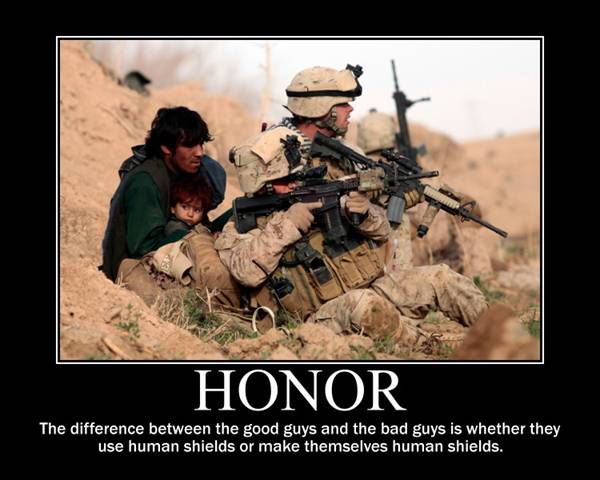
Mission Impossible - IED's combined with guerrilla warfare, where
terrorists embed themselves in civilian population, who are used as
human shields, has resulted in catastrophic civilian casualties and
psychological impact on combat troops. It is time we addressed these
challenges. -- According to Department of Veteran Affairs statistics,
22 veterans take their own lives each day.... That's 8030 veterans per
year.
During this Holiday Season, it would be good to reflect upon the
biblical message of forgiveness, that God is unconditional love and
that the sacrifice has already been made for all sins. It is only when
we embrace this reality, can we rest in His arms and have peace.
-- Interfaith
Study Center -- The Ultimate
Objective: Humanitarian Resource Institute
4 December 2013
"An average of 22 military veterans commit
suicide every day in this country, perhaps the best measure of the
mental health crisis among veterans. And 130 special courts for
veterans in 40 states are tackling that problem." -- Court
program helps at-risk veterans address what triggered bad behavior:
Stars and Stripes, 3 December 2013.
PTSD
Focus moves to Reality Based Programs
25 November 2013
- Sharpening the Tactical
Athlete - Applying the worlds most advanced biomechanics training
and exercise science from the Olympic development program to the
tactical athlete and rehabilitation of the wounded warrior.
12 November 2013
Warrior Care - Check out these apps that can help you or any wounded,
ill and injured service member feel better! - Navy Medicine Live
11 November 2013
Warrior
SOS - Veterans Day 2013
Happy Veterans Day to all
the brave men and women who have served and continue to serve our
country! - U.S. Dept of Defense
A key objective of the HRI: H-II OPSEC. Not Forgotten - Restore
Warriors Project is to (1) provide resource information and
materials on how to help veterans and their families, and (2) to reach
every household in the United States through the America's
Action Plan for Community Service.
Another way to get a grasp on these challenges is to learn from the
veterans and their families themselves. A book I found of
tremendous value is:
Warrior
SOS details the war experiences of military veterans in their
own words, with a focus on faith, healing and recovery. Combat veterans
of Afghanistan, Iraq and other wars courageously share their stories of
tragedy, injury, and post-traumatic stress (PTSD). Veterans, as well as
family members and advocates, tell how war has changed them and offer
suggestions to help heal the combat wounded soul. Available on
Amazon:
In Warrior SOS,
one of the contributors was Jeff Evans, who led the World T.E.A.M.
Sports' Soldiers to the Summit expedition filmed in the movie "High Ground."
Available on Netflix and will air on 11/11, 8PM on Pivot.tv (The
Documentary Channel), TV-14 L.
Honor Our Heroes This
Veterans Day & Every Day
25
September 2013
The U.S. Department of Veterans Affairs'
'Make the Connection' campaign is designed to help veterans overcome
and seek treatment for mental health conditions. Make the Connection
provides extensive resources for veterans suffering from mental health
conditions including video testimonials from veterans of all eras and
branches, information on recognizing symptoms and seeking treatment,
and VA approved treatment and support resources. -- USSOCOM Care
Coalition.
20 August 2013
9 August 2013
Congress has labeled the
Fort Hood attack an act of terrorism. In the wake of the attack, an
independent report commissioned by the FBI looked at ways to improve
counterterrorism measures. Even the president said the attack was
inspired by “larger notions of violent jihad.” -- Terrorism at
Fort Hood: The News Tribune, 9 August 2013.
31 July 2013
Getting a Grasp on a National
Public Health Crisis
According to Department of Veteran Affairs statistics, 22 veterans take
their own lives each day.... That's 8030 veterans per year. -- Veterans
group survey shows alarming suicide numbers: Stars and Stripes, 31
July 2013.
Did you know: September 10 is World Suicide Prevention
Day. In 2007, the most recent year for which we have statistics, 34,598
Americans died by suicide—about 11 suicides per 100,000 people,
according to the Centers for Disease Control and Prevention. -- The
Under-recognized Public Health Crisis of Suicide: National
Institute of Mental Health (NIMH).
14 July 2013
Working
to set up a support system for troops in all NATO Ally countries.
4 July 2013
Keeping our troops
and their families in our thoughts and prayers - July 4, 2013 - Not
Forgotten - HRI:H-II OPSEC.
1 July 2013
- USSOCOM Care
Coalition: SOCOM's Care
Coalition Advocates provide oversight and assistance for Special
Operations Forces (SOF) Wounded Ill & Injured (WII) service members
and their families through a continuum of care and recovery using the
Comprehensive Recovery Plan and Comprehensive Transition Plan. They
provide direct, lifelong assistance to SOF personnel who are wounded,
ill, or injured through effective follow up contact and collaboration
with multidisciplinary teams (MDT), medical case managers and other
military agencies. They also provide coordination for medical and
non-medical services and facilitate smooth rehabilitation and
transition back to active duty or civilian life for SOF WII service
members.
- USSOCOM
Link Library: Special thanks to
Mrs. Georgeann McRaven who coordinated the directory of online
resources for Military Families & Spouses, following the USSOCOM
Virtual Town Hall on 1 July 2013.
28 June 2013
As we discuss Polishing COINs and the importance of a solid security
plan in Iraq and Afghanistan.
Today - the anniversary of Operation RED WINGS, June 28th, 2005 - is a
day to remember those who fought bravely for our freedoms, and the
grave sacrifices made by the heroes of that day, and for the families,
friends and comrades whose lives were deeply and forever changed by the
valor of these men. -- Lone Survivor Foundation.
24 May 2013
Memorial Day 2013
This
Memorial Day weekend we thank and remember all of those soldiers, past
and present, who have served and sacrificed in the United States armed
forces to protect our freedom. John F. Kennedy spoke of your strength
and conviction when he famously said, “Let every nation know, whether
it wishes us well or ill, that we shall pay any price, bear any burden,
meet any hardship, support any friend, oppose any foe to assure the
survival and the success of liberty.” -- LEID
Products: Biometric asset
protection and control.
On
this Memorial Day, let us also thank and remember all of those
soldiers, past and present, who have served and sacrificed as allies of
the United States, to protect freedom and the fight for democracy
across the globe.
28 March 2013
The most recent report from the Department
of Veterans Affairs (VA) reveals that veterans are taking their own
lives at a rate of 22 each day, or one suicide every 65 minutes – a
20-percent increase from 2007. Even more gruesome, last year we saw
more suicides than combat deaths (349 to 295, according to the latest
Pentagon figures). -- Stop
the Madness,
John Roberts, Executive Vice President, Warrior Relations, Wounded
Warrior Project.
15 February 2013
When
we learn about challenges with PTSD and a suicide rate in soldiers
higher than those killed in combat, we begin to touch the surface of
being in a battlefield where human rights and the rule of law does not
exist. -- H-II - The
Soldier's Tear - Human Rights and International Law: HRI, 2.15.2013
8 February 2013
Sixteen Air Commandos finish their 450 mile ruck
from Hurlburt Field, Fla., to MacDill Air Force Base in Tampa, Fla. and
kneel at the statue in the center of USSOCOM’s Special Operations
Forces Memorial. The ruck was to honor the memory of Lt. Col. John D.
Loftis, 866th Air Expeditionary Squadron; Capt. Ryan P. Hall, 319th
Special Operations Squadron; Capt. Nicholas S. Whitlock, 34th Special
Operations Squadron; 1st Lt. Justin J. Wilkens, 34th Special Operations
Squadron; and Senior Airman Julian S. Scholten, 25th Intelligence
Squadron. Photo by Mike Bottoms, USSOCOM Public Affairs. -- USSOCOM.
23 January 2013
America's
Action Plan for Community Service
prioritized needs of veterans and their families in every U.S.
city/county area, 50 states and territories.
Uninsured Veterans
and Family Members - A National Healthcare Crisis
A 2012 report by the
Urban Institute and the Robert Wood Johnson Foundation, “Uninsured
Veterans and Family Members: Who Are They and Where Do They Live?”
(PDF), analyzes data from the 2010 American Community Survey (ACS) by
the U.S. Census Bureau and the 2009 and 2010 National Health Interview
Surveys (NHIS). The report seeks to identify uninsured non-elderly
veterans and to estimate the levels of medical coverage by state.
Results
of the report include:
- Approximately 1 in 10 — 1.3 million — of the
country’s 12.5 million nonelderly veterans did not have health
insurance coverage or access to Veterans Affairs (VA) health care as of
2010. When family members of veterans are included, the uninsured total
rises to 2.3 million. An additional 900,000 veterans use VA health care
but have no other coverage.
- “A variety of factors, including Medicaid
eligibility thresholds for adults, the characteristics of labor market,
and the proximity of veterans to VA facilities, may contribute to
variation across states in uninsurance rates among veterans.”
- “Uninsured veterans are less likely than
insured veterans to report service-related disabilities [although]
17.3% of the uninsured have either a service-related disability or a
functional limitation.” They are more likely to be male (90.4%),
non-Hispanic white (70.4%), unmarried (58.2%) and earned a high school
degree (40.7%). More than 40% are younger than 45 years old.
- Nearly 50% of uninsured veterans have incomes
at or below 138% of the
Federal Poverty Line ($30,429 for a family of four in 2010). Under
the ACA, these would qualify for coverage as of January 2014. Another
40.1% of veterans and 49% of their families have incomes that qualify
for new subsidies through health insurance exchanges with the ACA.
- A provision of the ACA mandates that each
state establishes a health
insurance exchange or a marketplace of health providers and plans
that individuals and small businesses can buy into. While the exchanges
do not need to be up and running until 2014, some states have already
started the process.
- The uninsured rate is 12.3% in states with the
least progress on exchange implementation, compared with 9.6% to 9.8%
for veterans in states with most progress to health insurance exchange
implementation.
Related:
---------------------------------
31 December 2012
Despite
intensification of outreach programs for our troops, we have a clear
need for specialized outreach for family and community members, who
serve as the primary support system for wounded warriors.
Stars and Stripes
Suicide
in the military: Special Report
---------------------------------
HIGH
GROUND
In Theaters November 2012
Eleven veterans returning from Iraq and Afghanistan join an expedition
to climb the 20,000 foot Himalayan giant Mount Lobuche. With blind
adventurer Erik Weihenmayer and a team of Everest summiters as their
guides, they set out on an emotional and gripping climb to reach the
top in an attempt to heal the emotional and physical wounds of the
longest war in U.S. history.Representing nearly every branch
of the military, the veterans, and the
Gold Star Mom who joins their trek, bring humor and deep emotion to
this hero’s journey all captured with breathtaking, vertigo-inducing
cinematography by three-time Emmy® winner, director Michael Brown.
High
Ground: Official Web Site.
Movie
Trailer: A Don Hahn Production of a Michael Brown Film.
Netflix:
Available in HD
Related:
----------------------------------------------
Warrior Spotlight
To say Chris Fleming is an inspiration is
an understatement. Hurt in
the line of duty, Chris refuses to let his injuries prevent him from
competing in 3-Gun. Hear Fleming's story of how competitive shooting
has played a role in his recovery. -- Wounded Warrior
Spotlight: Chris Fleming: HRI:H-II, 26
October 2012.
----------------------------------------------
16
May 2012
Stephen
Michael Apatow
Founder,
Director of Research & Development
Humanitarian
Resource Institute (UN:NGO:DESA)
Humanitarian University
Consortium Graduate Studies
Center
for Medicine, Veterinary Medicine & Law
Phone:
203-668-0282
Email:
s.m.apatow@humanitarian.net
Internet:
www.humanitarian.net
H-II:
OPSEC
Url:
www.H-II.org
Not Forgotten - Restore
Warriors Project
National
Campaign targets 3000 counties in 50 States and Territories
The members of our armed
forces serve to protect and it's time
that we show
respect, honor and gratitude for their sacrifice. This need has
prompted
a national call for all communities, businesses and corporations to
commit
special programs and assistance for current members/veterans of our
armed
forces, especially our most severely wounded warriors and wounded
transitional.
-- H-II: Stephen Michael Apatow
Credit: NATO SOF Training and Education Program
Restore Warriors Project
The
Goal: Help wounded service members and their families who are
struggling with the impact of combat stress in their daily
lives.
Restore
Warriors has been created to provide:
- Information about combat stress-related
injuries
- Help to assess your emotions and behaviors
- Reassurance that you are not alone - an
estimated 600,000
military personnel and veterans will suffer from invisible
injuries
- Hope that you can successfully deal with these
symptoms
- Help to renew your self-confidence
- Assistance to build stronger relationships
- A new sense of well-being
Restore
Warriors is an anonymous website where real
warriors share their personal stories, situations, and strategies
for fellow warriors and their families to help themselves deal with
real life, everyday issues related to combat stress, PTSD, and
brain injuries. On The web at:
http://restorewarriors.org/
Keeping
Our Troops and their Families in Our Thoughts and Prayers
In
2011 More US soldiers killed themselves than were killed in combat.
When
guns fall silent and ceasefires are agreed, wars live on in the minds
of the men and women who fought them. And a killer still stalks them,
more deadly than the enemies they once faced. -- US war woe: Suicide kills more soldiers than combat : RT, 23 December
2011.
6,303
U.S. service members have died in Operation Iraqi Freedom and Operation
Enduring Freedom. -- Remembering 6303 Fallen Troops - Human Rights Day 2011: HRI:UNArts, 12
December 2011.
The Amerca's
Action Plan for Community Service continues to focus on the
unmet needs:
- Homeless
Veterans: Between 529,000 and
840,000 veterans are homeless at some time during the year. On any
given night, more than 300,000 veterans are living on the streets or in
shelters in the U.S. Approx. 33% of homeless males in the U.S. are
veterans.The number of homeless Vietnam-era veterans, male and female,
is greater than the number of soldiers who died during the war. -- Veterans
and Homelessness Statistics: Veterans Inc.
- Female Homeless Veterans: The
population of female veterans without permanent shelter has more than
doubled in the last half-dozen years and may continue climbing now that
the Iraq war has ended, sending women home with the same stresses as
their male counterparts - plus some gender-specific ones that make them
more susceptible to homelessness. - Homelessness
increasing for female veterans: Boston Globe, 9
April 2012.
- Veterans Unemployment: Iraq and
Afghanistan Veterans of America said in a survey of its membership
released in March that 16.7 percent of its members were unemployed.
Among the unemployed, 24 percent said they could not find a job that
matched their skills or experience, and 11 percent said they could not
find a job that matched their level of education. -- Young
vets’ joblessness hits 10.3 percent: Military Times, 6 April 2012.
- Veterans Foreclosure Crisis:
Unemployment, debt and a troubled housing market are plaguing families across
the country, but for those in the armed forces, there is an even bigger
burden to bear.... According to the Department of Defense, military
families move 10 times more often than civilian families. -- Military
families face financial hurdles: CNN, 27 March 2012.
Resources:
###
|